
Chinese Gybe
NOUN | A Chinese gybe is an uncontrolled, accidental gybe in which the boom swings violently across the boat when the wind catches the sail from the opposite side.

3 april 1700h | 830 nm west of Flores, Azores
Today we crossed our halfway point. We celebrated it with a shot of rum and a stroopwafel, which was a welcome relief from the standard diet of freeze-dried meals and instant noodles. We also had a change in weather conditions. After three days of very fast downwind sailing, today was calm, with the sun shining and wind speeds not exceeding 15 knots. This meant we could dry our clothes and shave.
As I’m writing this, the sky above us is still clear but to our north a wall of dark clouds is signalling change. On its way to us is a monster low pressure system that fills me with a mixture of excitement and anxiety. If navigated well, it will propel us home like a slingshot, but with wind speeds of over 80 knots at its core, it is critical we don’t end up too far into the system.
9 april 1000 | Horta, Faial, Azores
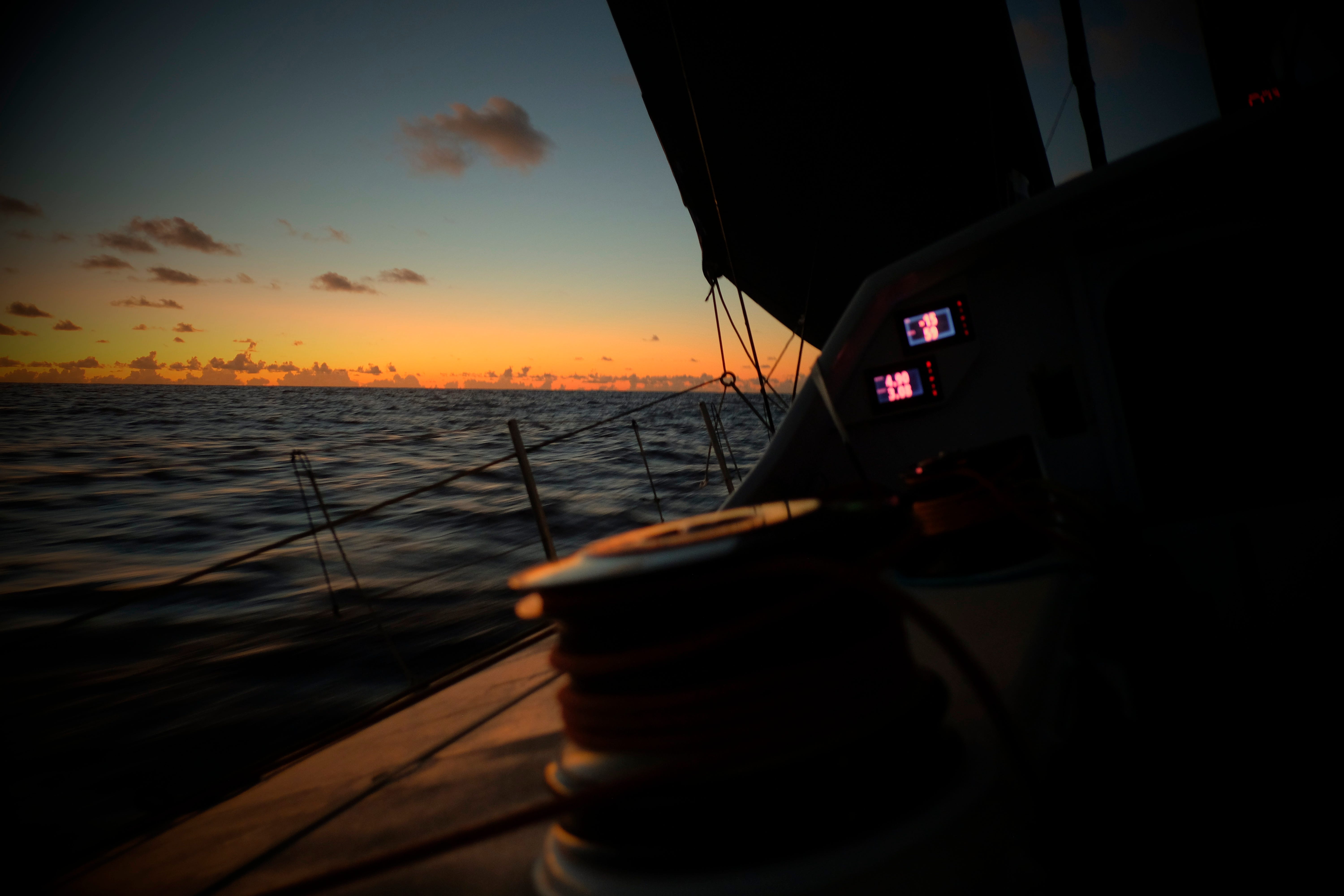
The dark clouds did indeed signal change. When the system caught up with us we had two days of high-octane sailing with phenomenal speeds and equally phenomenal amounts of water coming over deck. In these conditions I could barely eat and sleep, let alone write blogs. Hence the radio silence.
Even though we stayed on the edge of the system, wind speeds regularly exceeded 50 knots (although at some point we lost track because the wind instruments broke). In these conditions, the sailing was exhilarating. Even with a reefed mainsail and a J3 we reached incredible speeds. My personal record is now 29.something knots (at this point there was so much spray I lost sight of the instruments). Stan, the Polish crewmember, reached 32.9.
However, as the hours passed, the boat became increasingly hard to control. The wind wasn’t the problem - the boat was designed for the Southern Ocean and can handle a gale. But the waves were. In my life I’ve spent a fair amount of time at sea, but never have I encountered waves of these heights. And they weren’t just high; they were high and short. Not a long ocean swell that spans hundreds of meters between crest and hollow (like the ones you get in the Southern Ocean), but steep slopes just a few boat lengths apart. This meant the moment we flew down the one side of a wave, we crashed into the back of the next wave, decelerating from 28-29 knots to a standstill in a fraction of a second (For this reason, you sleep with your feet facing forward, so that when lying in your bunk, your feet take the impact rather than your head). These standstills placed immense loads on the equipment and took their toll: in one night we tore both the fractional zero and the cunningham.
During one offwatch I was lying awake in my bunk - sleeping was out of the question at this point - and felt the boat nearly broaching a couple of times. I thought to myself: this is slipping out of control. After four sleepless hours it was time to go back outside. I put my foulweather gear on, still soaked from the previous watch, forced a smile so as not to show the guests my apprehension, and came on deck.
Then it happened. It’s a bit blurry, but I remember a monster wave and a shout from the helmsman. The next moment the boat was at 90 degrees, the masttop touching the water. Sails were flogging violently. The masthead zero, our largest sail, which had been lashed onto the deck, was gone, taking the guardrail and some stanchions with it to the seafloor. It took a moment before our minds could process what had happened, but then we got to work and did what we had to. We had to clamber up through the cockpit as though it were a mountain face, but in the end we managed to centre the keel and change the runners, allowing the boat to come upright again. We then furled the headsails, took the mainsail down and secured everything on deck. Below deck the guests were shaken but safe. We bore away, unfurled the J2, and set sail for the Azores.
There were still 260 miles between us and Horta, the nearest port, but luckily we were sailing fast. Even with just a J2 up we reached speeds of 25+ knots. I was glad, because with all my clothes and my sleeping bag now soaked, I was extremely cold and unable to sleep. And yet, despite the cold and the exhaustion, I felt a deep sense of happiness. The incident had forged a bond between the crew that is hard to describe. At some point I was on deck with Stan, shivering behind the wheel but unable to stop laughing as he cracked joke after joke.
After 30 sleepless but not altogether unpleasant hours we arrived in Horta, where we did not get much sleep either, for we had to work around the clock to get the boat ready to sail again. There were still 1,600 miles to go to Scheveningen and the boat had to get there without much delay. Even when we could have slept, we didn’t. Instead we went to the pub, where we drank all night with the entire crew, celebrating our safe arrival.
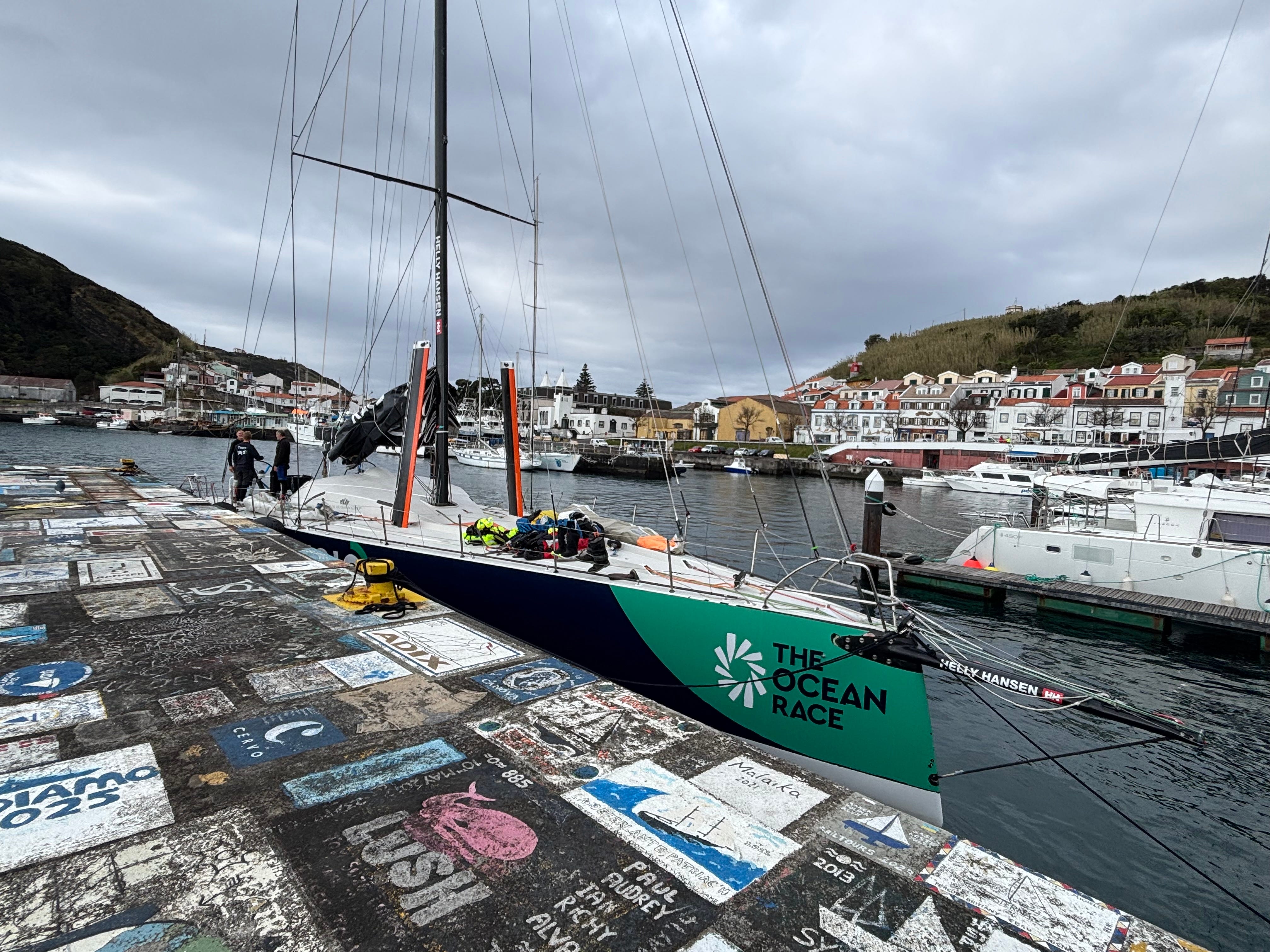
Yesterday evening the boat set sail again, but without me. I’m at the airport now, about to catch a flight to Lisbon, and then on to Amsterdam. I feel mixed about this, because I would have liked to end this crossing properly, by sea. However, I need to be in Cape Town as soon as possible, to continue Warrior’s refit and prepare her for sea. Because although this was a humbling experience, I can’t wait to be on the ocean again.